
GCSE History Tutoring
Online GCSE History tutoring for AQA, Pearson Edexcel, OCR (History A and History B) and WJEC Eduqas, matched to your exact topics: source and interpretation questions, essays with a clear judgement, and the historic environment study.
Every GCSE History course combines a thematic study across centuries, a period study, depth studies and a study of a historic site, but each board and school picks different topics. A GCSE History tutor works on your options, helps you organise a lot of content so you can recall it under time pressure, and trains the skills the marks depend on: evaluating sources and interpretations, explaining causes and consequences, and reaching a supported judgement.
What You Get with GCSE History Tutoring
Structured support designed to improve understanding, exam technique, and confidence.
Essays with a Judgement
- Planning answers that argue towards a judgement instead of retelling events
- Causation, consequence, change and continuity, significance, and similarity and difference
- Using precise, relevant detail as evidence for each point, including on long thematic questions
Sources and Interpretations
- How useful a source is, judged from its content, provenance and your own knowledge
- Explaining why historians' interpretations differ and how far you agree
- Questions on the historic environment, linking a site to its wider historical context
Knowledge You Can Recall
- Timelines and summaries for each of your units so dates and key people stay in order
- Retrieval practice spread across all your topics, not just the most recent one
- Selecting the most relevant evidence quickly in timed conditions
Students Improving Their History Grades
"My tutor helped me stop describing events and start actually answering the question with judgement."
Ivy
Year 11 student, Edexcel
"Source questions became much easier once I knew exactly how to use provenance and context together."
Sam
Year 10 student, AQA
"The revision structure made a huge difference because I could finally keep different topics and evidence separate in my head."
Lily
Year 11 student, OCR
How It Works
Simple steps to get started with GCSE History tutoring
Buy a Bundle
Choose the number of hours you need based on your current level and exam timeline.
Complete Onboarding
Share your exam board, your tier if the subject has one, weak topics, and goals so matching is precise.
Start Lessons
Get matched within 24 hours and begin sessions focused on measurable improvement.
Meet our GCSE History tutors
Experienced tutors who teach this subject. Open a profile to read more.
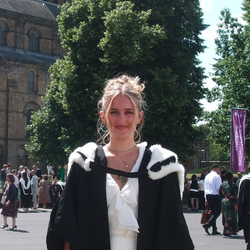
Eva
European History HL and Geography SL tutor
I have a strong academic background and a passion for helping students reach their full potential. I achieved 43 points in the IB, including a 7 in each subject I tutor, an A in...
- European History HL
- Geography SL
- English A HL
View profile
Laura
History and Mathematics tutor
I am an experienced A-level tutor specializing in Mathematics, English, History, and French, having achieved 5 A*s at A-level. My approach goes beyond content mastery—I focus on...
- History
- Mathematics
- English
View profile
Louisa
Philosophy SL and Philosophy HL tutor
Hi guys! My name is Louisa and I completed the IB last year at a boarding school in England. It was two of the most stressful years of my life, but I also loved the subjects I t...
- Philosophy SL
- Philosophy HL
- English A SL
5 hours tutoredView profile
Natasha
English and European History SL tutor
I’m Natasha, a passionate tutor with a strong academic background. I was awarded the Best in Europe and Best in Spain awards for my GCSEs, achieving top grades across all subjec...
- English
- European History SL
- European History HL
53 hours tutoredView profile
Nicholas
European History SL and European History HL tutor
As a licensed educator with over a decade of experience, I have successfully supported students through A-Levels and the IB Diploma Programme, specializing in IB History and The...
- European History SL
- European History HL
- Theory of Knowledge
View profile
Rhea
Latin SL and Mathematics tutor
Hello! I'm Rhea, I just finished my first year as an Economics and Economic History student at the London School of Economics. I have two years of tutoring experience, helping s...
- Latin SL
- Mathematics
- Economics
5 hours tutoredView profile
GCSE History Syllabus Coverage
GCSE History in England always includes a thematic study, a period study, a British depth study, a wider world depth study and a historic environment study, and at least 40% of the assessed content is British history. Your school chooses the topics within your board's options, so tutoring is built around your units.
1Thematic Studies (Change over Centuries)
- Medicine or health, for example AQA Health and the people or Edexcel Medicine in Britain, c1250 to present
- Crime and punishment, power and democracy, or warfare and British society
- Migration, for example AQA Migration, empires and the people or OCR Migrants to Britain
- Factors driving change and continuity across long periods
2Period Studies
- Germany or America over at least 50 years, for example AQA Germany, 1890-1945
- International relations, such as Edexcel Superpower relations and the Cold War, 1941-91
- The American West, the development of the USA or the USSR
- Narrative accounts and explaining key developments
3Depth Studies
- British depth studies such as Norman England or Elizabethan England
- Wider world depth studies such as Weimar and Nazi Germany or conflict and tension between the wars
- Key events, individuals and their significance
- Using sources and interpretations within a depth study
4Historic Environment
- The site set by your board, for example Edexcel's British sector of the Western Front
- AQA's historic environment within the British depth study
- OCR History B's History Around Us paper and Eduqas's historic site within the thematic study
- Linking a site's features to its historical context
5Sources and Interpretations
- Usefulness and reliability from content and provenance
- Inference from sources
- How and why interpretations differ
- Applying your own knowledge to test a source or view
6Exam Technique and Revision
- Matching the answer to each question type and mark tariff
- Writing a supported judgement in long answers
- Spelling, punctuation and grammar marks on key questions
- Timing across sections and papers
GCSE History Assessment Structure
GCSE History is assessed entirely by written exams, with no tiers and no coursework; the historic environment is examined in the papers. Each board splits the course into two or three papers, so check your board below.
AQA History (8145)
Written examPaper 1, Understanding the modern world: a period study (for example Germany, 1890-1945) and a wider world depth study on conflict and tension. Paper 2, Shaping the nation: a thematic study (health, power or migration) and a British depth study including the historic environment. Each paper is 84 marks, including 4 for spelling, punctuation and grammar, and 50% of the GCSE.
Pearson Edexcel History (1HI0)
Written examPaper 1: a thematic study with its historic environment, such as Medicine in Britain with the British sector of the Western Front; 52 marks, 30%. Paper 2: a period study and a British depth study, such as Superpower relations and the Cold War with Early Elizabethan England; 64 marks, 40%. Paper 3: a modern depth study, such as Weimar and Nazi Germany; 52 marks, 30%.
OCR History A, Explaining the Modern World (J410)
Written examPaper 1: International relations, 1918-c.1975, with a non-British depth study; 50%. Paper 2: a British thematic study, such as Migration to Britain c.1000 to c.2010; 25%. Paper 3: a linked British depth study with a study of the historic environment; 25%.
OCR History B, Schools History Project (J411)
Written examPaper 1, British history: a thematic study (People's Health, Crime and Punishment or Migrants to Britain) and a British depth study; 40%. Paper 2, History Around Us: a study of a local historic site; 20%. Paper 3, World history: a period study and a world depth study, such as Living under Nazi Rule; 40%.
WJEC Eduqas History
Written examComponent 1, Studies in Depth: one British depth study, such as The Elizabethan Age, and one non-British, such as Germany in Transition, 1919-1939, from different eras; 50%. Component 2, Studies in Breadth: a period study and a thematic study, such as Changes in Health and Medicine, which includes the historic site; 50%.
Key Assessment Notes
- GCSE History is not tiered and has no coursework. The historic environment or site study is assessed in a written exam.
- Each board offers a choice of options, and your school chooses which ones you study, so two students on the same board can have different topics.
- Spelling, punctuation and grammar carry marks on specific questions on every board shown here.
- Paper details are taken from the current AQA, Pearson Edexcel, OCR and WJEC Eduqas specifications for exams in 2027 and 2028.
Frequently Asked Questions
Common questions about GCSE History tutoring
Recommended Guides
GCSE Subjects Overview
Compare GCSE subjects and tutoring options.
Read guideA Level History Tutoring
Planning to take history further? See how A Level History tutoring works.
Read guideHow Pricing Works
See how subject bundles and tutoring hours are structured.
Read guideContact the Team
Discuss exam boards, availability, and your goals.
Read guide